

What Are the Best Wigs for Women With Complete Hair Loss?
 October 01, 2026
Human Hair Wigs 101
Views: 37
October 01, 2026
Human Hair Wigs 101
Views: 37
The best wigs for bald women are the full-cap wigs that will be soft to touch, secure to wear without having to rely on your own hair, and will have realistic hairline and scalp. Some examples of such wigs include lace front, monofilament, and 100 percent hand-tied wigs.
Should you have alopecia, chemo-induced hair loss, or some other kind of complete hair loss, buying a wig is likely going to be a totally different experience than just changing your hairdo.
When there is little or no natural hair under the wig, three things become much more important:
Comfort: The cap sits directly against your scalp.
Security: You may not have hair for wig clips to hold onto.
Realism: Your hairline and part become more noticeable.
That is why the “best wig” is not only about beautiful hair. The cap construction matters just as much as the hair itself.
Here is a quick comparison:
| Wig Feature | Why It Helps Bald Women | Best For |
| Lace front | Creates a natural-looking front hairline | Realistic everyday looks |
| Monofilament top | Creates a scalp-like part | Natural parting |
| 100% hand-tied cap | Soft, flexible and has fewer hard seams | Sensitive or bare scalps |
| Silicone grip | Adds grip against the scalp | Complete hair loss |
| Wig grip band | Helps reduce slipping without clips | Daily wear |
| Vacuum/full silicone cap | Uses close scalp contact for security | Total scalp hair loss |
| Human hair | Natural movement and flexible styling | Premium everyday wigs |
| Synthetic hair | Easier care and usually lower cost | Low-maintenance wear |
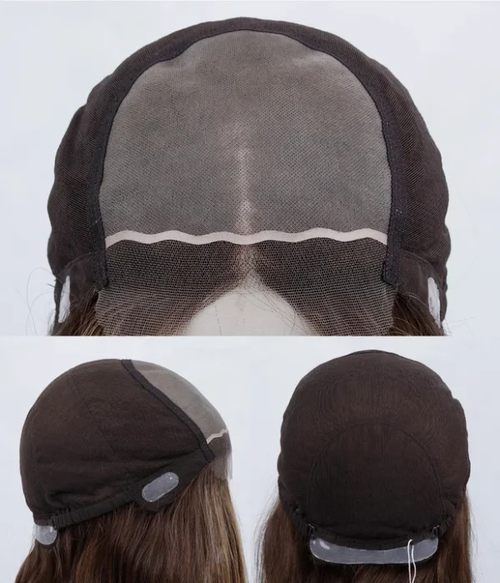
The National Alopecia Areata Foundation (NAAF) notes that hand-tied wigs can be ideal for people with total hair loss or scalp sensitivity because there are no traditional wefts or seams. It also explains that medical wig caps may use materials such as bamboo, silk, cotton, or silicone gripping for comfort and security.
Which are the best wigs for women with complete hair loss?
When it comes to complete hair loss, the best wigs for you will be full caps with soft hand-tied top, lace front, monofilament top or medical cap. A good fit is especially important because clips have little or no natural hair to grip.
For someone with complete baldness, we would usually put cap construction before hairstyle.
Best wig features for complete hair loss
| Priority | What to Look For | Why |
| 1 | Correct cap size | Helps prevent movement and pressure |
| 2 | Soft cap interior | More comfortable against bare skin |
| 3 | Hand-tied construction | Reduces bulky seams and gives natural movement |
| 4 | Lace front | Creates a realistic front hairline |
| 5 | Mono top | Makes the part look more scalp-like |
| 6 | Adjustable fit | Helps fine-tune security |
| 7 | Grip or silicone features | Useful when there is no hair underneath |
NAAF specifically says that hand-tied wigs are ideal for people with total hair loss or scalp sensitivity. It also describes medical wig caps as caps that may include soft bamboo, silk, or cotton lining and silicone gripping.
The American Cancer Society also notes that hand-tied wigs tend to be lightweight and breathable and can be a good option for people with sensitive scalps.
For example, the UniWigs Amelie Medical Wig combines a lace front, monofilament top and 100% hand-tied cap. It is designed for partial or total hair loss, including alopecia. The current design uses Remy human hair, 130% density and two cap-size options.
The important point is not that every bald woman needs a “medical wig.” It is that women with no hair should pay closer attention to what actually touches and holds onto the scalp.

Is the use of a wig a cause of baldness?
The use of a wig alone does not lead to baldness. The major problem is that of pulling, rubbing, hair clips, hair adhesives, and styling of hair below the wig, which results in tension on the current hair. This may eventually lead to traction alopecia, and your wig should feel comfortable without being excessively tight.
According to the American Academy of Dermatology, hair pulling regularly can result in traction alopecia. If that pulling continues for too long, some hair loss can become permanent.
A wig itself is therefore not the simple cause-and-effect problem people sometimes imagine.
Instead, pay attention to how you wear it.
Stop and check the fit if you notice:
Pain around the hairline
Strong pulling or tension
Stinging
Redness or irritation
Broken hairs around the forehead
Moving hairline backwards
It is important to remember a basic principle - a snugly fitting wig should not necessarily hurt when worn.
How do you keep a wig from slipping on a bald head?
In order to prevent the sliding of a wig on a bald head, it is recommended to choose the right cap size and adjust the attached straps. Should more traction be needed, consider using the following products: wig grip, silicone grip, wig tape or wig-specific adhesives. Complete hair loss does not necessarily mean clip attachment of a wig.
Before buying extra products, however, check the wig size.
A wig that is too large can move even when you add more grip. A wig that is too small may feel painfully tight and can ride upward.
The American Cancer Society recommends carefully fitting an adjustable wig and also suggests a cushioned wig grip band as one way to help hold a wig securely and comfortably.
Wig security options for a bald head
| Method | Needs Natural Hair? | Good For Daily Use? | Notes |
| Correctly fitted wig cap | No | Yes | Always start here |
| Adjustable straps | No | Yes | Built into many wigs |
| Wig grip band | No | Yes | Easy, removable option |
| Silicone grip | No | Yes | Often found in medical-style caps |
| Wig tape | No | Depends | Gives extra hold |
| Wig adhesive | No | Depends | Stronger hold but requires proper removal |
| Clips/combs | Usually yes | Not ideal for bald heads | Need hair to grip |
| Vacuum wig | No | Yes | Custom option for total hair loss |
NAAF describes a wig grip as a non-slip band worn under a wig to help keep it secure without adhesives and notes that it is often used by people with total hair loss.
Do not solve every slipping problem by making the wig tighter. Fit first, grip second.
What wigs stay on without hair or clips?
Wigs can stay on without natural hair or clips when they use the right fit plus alternative grip systems. Wig grippers, silicone pieces, wig caps, tape and even wig glue may prove useful.
There is no one-size-fits-all security measure to be tried by all.
A properly fitting cap along with wig gripper is probably one of the easiest methods of all if you are looking for an easy removal each night.
If you are in need of some extra security, then you can try out either of the two, depending upon your skin and wig type.
For complete hair loss, there is also a more specialized option: the vacuum wig.
So, no—you do not need natural hair for a wig to stay on.
Are lace front wigs comfortable for bald women?
Yes, a well-fitted lace front wig can be comfortable for a bald woman, especially when it is combined with a soft or hand-tied cap. Lace is thin and creates a realistic hairline, but comfort depends on the lace material, cap size, scalp sensitivity, and whether tape or adhesive is being used.
The main job of a lace front is to make the front hairline look natural.
Individual hairs are attached to a fine lace area, helping the hair appear to come from the skin rather than from a thick wig edge.
For bald women, however, look beyond the lace front.
Ask what is behind it.
A wig with a lace front but a rough or bulky interior may still feel uncomfortable on a bare scalp. A lace front + monofilament top + hand-tied cap can offer a better balance between appearance and comfort.
This is especially important if you plan to wear your wig for many hours at a time.
Are medical wigs better for women with hair loss?
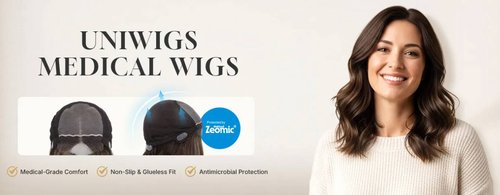
Medical wigs are not automatically better for every woman with hair loss. Their advantage is usually in the cap design: softer materials, fewer irritating seams, secure fit, silicone grip, hand-tied construction, or other features designed for sensitive scalps and significant hair loss. Choose by features and fit, not the label alone.
“Medical wig” can sound like one exact type of wig, but it is better to think of it as a group of hair-loss-friendly design features.
NAAF explains that medical wig caps may include:
Bamboo, silk or cotton lining
Silicone gripping
Monofilament construction
Lace fronts
Hand-tied construction
These features can make a meaningful difference when the scalp has little or no natural hair protecting it.
A medical-style wig may be especially worth considering if you:
Have alopecia totalis or alopecia universalis
Have lost your hair during medical treatment
Have a sensitive scalp
Wear a wig most days
Cannot comfortably use clips
Need a softer cap against bare skin
UniWigs’ Amelie Medical Wig, for example, uses a 100% hand-tied cap together with a monofilament top and lace front. It is made for partial or total hair loss and is currently available in 130% density.
But the word “medical” alone should never make the decision for you. Check the cap construction, materials, measurements and security system.
Can you wear a wig every day if you have no hair?
Yes, many women with no hair wear wigs every day. For regular wear, choose a correctly fitted, breathable cap and keep both the wig and scalp clean. Remove the wig when appropriate to clean and check your scalp, and address itching, redness, sores or ongoing discomfort instead of simply covering them.
Daily wear makes comfort more important, not less important.
Think about what will be touching your scalp for hours.
A soft hand-tied cap can reduce bulky seams. A wig liner can also help some people manage sweat and friction. The American Cancer Society notes that wig liners can provide protection and improve comfort when the scalp is sensitive.
For an everyday wig, also consider density.
Very heavy hair can look beautiful, but more hair does not always mean a more natural wig. Lower or moderate density can sometimes look more realistic and feel lighter, especially around the hairline and crown.
Your daily wig should feel like something you can live in—not something you cannot wait to remove.
How do you care for your scalp when wearing a wig with no hair?
Keep a bald scalp clean, dry and comfortable before putting on a wig. Use gentle products, manage sweat, avoid irritating adhesives, and regularly check for redness or sore areas. When your scalp is uncovered outdoors, protect it from the sun with a hat, wig, or broad-spectrum SPF 30+ sunscreen.
Without hair, your scalp is more directly exposed to sun, friction and whatever materials are inside your wig.
A simple routine works well for many people:
Clean gently. Avoid aggressive scrubbing.
Dry your scalp before putting on the wig. Trapped sweat can make wearing the wig uncomfortable.
Check your skin. Look for redness, sores or irritation.
Keep the wig interior clean. Oil and sweat build up where the cap touches your skin.
Use a soft liner if needed. This can help with sweat and friction.
Protect exposed scalp outdoors.
If your scalp is persistently painful, inflamed, very itchy, broken or developing sores, talk with your dermatologist or medical care team before continuing your normal wig routine.
What is the most natural-looking wig for bald women?
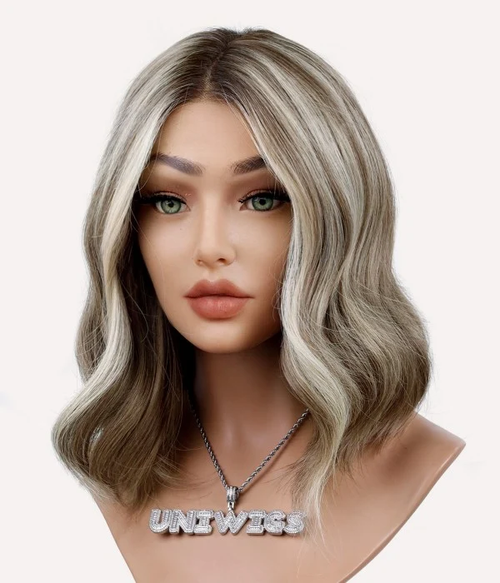
For most bald women, a human hair wig combining a lace front with a monofilament or lace top gives one of the most natural-looking results. The lace helps hide the front edge, while the top creates a scalp-like part. Hand-tied construction and realistic density can make the overall movement look more natural.
Think of realism as several small details working together.
What makes a wig look natural?
| Feature | What People See |
| Lace front | Hair appears to start naturally at the forehead |
| Mono or lace top | Part looks more like a real scalp |
| Hand-tied hair | Hair moves in different directions more naturally |
| Human hair | Natural texture, shine and movement |
| Realistic density | Avoids an overly thick “wiggy” appearance |
| Good color dimension | Mimics natural highlights and lowlights |
| Correct cap size | Helps the wig sit in the right position |
So the most natural-looking wig is not simply “human hair.”
A better formula is:
natural hairline + realistic scalp + natural density + good fit + believable hair movement.
How do you choose the right wig size for a bald head?
Measure your head after significant hair loss whenever possible because your old wig size may no longer give you the same fit. Measure around the head above the ears and across the forehead, then compare your measurements with the wig brand’s size chart instead of assuming that every “small” or “medium” fits the same.
Fit matters more when there is no natural hair underneath the cap.
The American Cancer Society provides these example circumference measurements:
| General Wig Size | Approximate Head Circumference |
| Petite | 21 inches |
| Average | 21.5 inches |
| Large | 23 inches |
These are useful reference points, but wig sizing can vary by manufacturer.
Always check the exact product measurements.
A wig should feel secure around your head without creating painful pressure.
Is human hair or synthetic hair better for bald women?
Neither fiber is automatically better for bald women. Human hair offers natural movement, heat styling and more styling freedom, while synthetic hair is usually easier to care for and less expensive. For a bare scalp, cap comfort and fit often matter more than whether the hair itself is human or synthetic.
Here is the simple comparison:
| Feature | Human Hair Wig | Synthetic Wig |
| Natural movement | Excellent | Good to excellent |
| Styling freedom | High | Depends on fiber |
| Heat styling | Usually yes | Only if heat-friendly |
| Daily maintenance | Higher | Lower |
| Price | Usually higher | Usually lower |
| Style memory | Needs restyling | Usually holds style well |
| Best for | Natural styling flexibility | Easy everyday care |
The American Cancer Society similarly notes that synthetic wigs tend to cost less and require less maintenance, while human hair wigs offer greater styling flexibility and can often last longer when properly cared for.
If you are completely bald, however, we would choose cap first, fiber second.
A beautiful human hair wig with an uncomfortable cap will not become your favorite everyday wig.
What should you look for before buying a wig for complete hair loss?
Before buying a wig for complete hair loss, check the cap construction, size, interior softness, security method, hairline, density and return policy. If possible, choose a wig specifically designed to sit comfortably against a bare scalp rather than depending on clips attached to natural hair.
Use this checklist before ordering:
Does it provide full-head coverage?
Is the cap available in your actual head size?
Does it have adjustable straps?
Is there a lace front?
Is the top lace, monofilament or another scalp-like material?
Is the cap fully or partly hand-tied?
Are there hard seams touching the scalp?
Does it depend on clips?
Can you add a wig grip if necessary?
Is the density realistic for your preferred look?
What is the return or exchange policy?
For someone with complete hair loss, these practical details can matter much more than how the wig looks on a mannequin.
So, what is the best wig for a bald woman?
The best wig for a bald woman is a full-coverage wig that fits correctly, feels soft against bare skin, stays secure without pulling, and creates a believable hairline and scalp. For many women with complete hair loss, a lace-front, monofilament and hand-tied cap is a strong combination for daily wear.
There is no one wig that is best for every woman.
If comfort is your biggest concern, start with a soft or fully hand-tied cap.
If realism matters most, look for a lace front and realistic parting area.
If security is your concern, focus on fit, adjustable features, wig grips or silicone rather than depending only on clips.
If you have complete hair loss and a sensitive scalp, a medical-style hand-tied wig can be worth considering.
And if you want the most natural styling flexibility, a well-made human hair wig can give you more freedom to change your part, texture and overall look.
The goal is simple: your wig should look like hair, feel comfortable on your scalp, and let you go through your day without constantly thinking about whether it will move.
SHARE:



Popular Posts
-
How to Make Your Wig & Hair Topper Look Natural in Office Settings
![]() 878
878 -
Best Breathable Wig & Hair Topper Options for All-day Office Wear
![]() 712
712 -
Alopecia Myth vs Fact: Breaking Common Misconceptions About Hair...
![]() 404
404 -
What Is Alopecia? Beginner FAQ Guide to Types, Causes, Signs &...
![]() 350
350 -
When Alopecia Changes: How to Update Your Hair System as Hair Loss...
![]() 275
275
 878
878 Writers Cooperation:
UniWigs are seeking for blog contributors who know and love hair. If you know alternative hair or hair related accessories, if you have great understanding of hair trends and fashion, if you are expert in hair care, if you have any experience with salons or celebrities, if you would like to share your experience to help people just like you make the right choice, now contact us at [email protected] to be a blog contributor. Let’s discuss the details then.
Comments
Welcome Back!
Forgot your password?